About
NOISE - Nodes of Influence and Spheres of Exchange
NOISE is a data structuring project developed alongside a dissertation funded by the Swiss National Science Foundation.
The project centers on the systematic extraction and consolidation of named entities—primarily persons and companies— from a wide range of historical sources, including directories, membership lists, trade indices, and archival records. Individual occurrences are parsed and normalized into entities, allowing actors to be traced across time, sources, and institutional contexts.
This approach enables longitudinal analysis of economic participation and stability: memberships, affiliations, and activities can be followed across decades, compared between datasets, and related to specific locations and sectors. Most entries are geocoded, and trade activities are categorized, allowing the data to be explored both spatially and economically.
While some sources contain explicitly relational information, NOISE does not impose a fixed network model. Instead, connections emerge through aggregation: patterns of overlap, persistence, exception, or absence become visible only when entities are viewed across the full corpus.
The name NOISE reflects this methodological stance in a second sense. Beyond the acronym, it points to the “noise” of complex economic realities—the minor actors, irregular patterns, and unexpected constellations that are often filtered out in traditional narratives focused on large firms or formal institutions. By structuring data at the level of individual actors and their occurrences, the project enables the study of these subtler dynamics within global trade networks, particularly under the conditions of crisis and war.
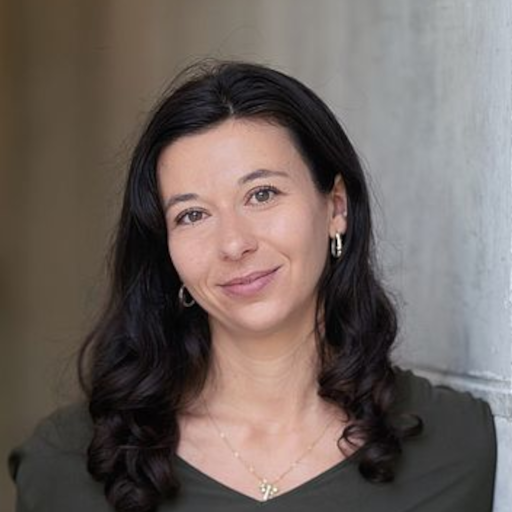
Lea Katharina Kasper
PhD Student in European Global Studies, Institute for European Global Studies, University of Basel
Lea Katharina Kasper is a PhD researcher at the Institute for European Global Studies, University of Basel. She holds an M.A. in European Global Studies from the Institute for European Global Studies.
Her academic work is situated in economic history, with a focus on international trade networks, market structures, and the role of individual actors within them. She combines historical inquiry with digital methods to analyse complex economic relationships across local and global contexts.
Her doctoral research, “Lessons to Learn? Unfolding a Global Market in Difficult Times”; The British Chamber of Commerce for Switzerland 1920–1950, is supported by a Doc.CH grant from the Swiss National Science Foundation (SNSF), project no. 211961.
 https://orcid.org/0000-0002-4671-1700